Kyoto, Japan

Kyoto

JapanAsia

If Tokyo is Japan's dazzling future, Kyoto is its soul. For over a thousand years this was the imperial capital, and it still holds the country's cultural heart: more than 1,600 temples, serene zen gardens, vermilion shrine gates marching up forested hills, and quiet wooden streets where, if you're lucky, you might glimpse a geisha hurrying to an appointment. It's a city that rewards slowing down, where the pleasure is in wandering a mossy temple garden, sipping matcha in a centuries-old teahouse, or watching the light fade over the rooftops from a hillside path. The good news for budget travellers is that Kyoto's reputation as Japan's pricey temple city is friendlier than it sounds. Most of the famous shrines are completely free, lunch sets cost less than a sandwich back home, and a hostel bed in a converted wooden townhouse runs under thirty pounds. As with the rest of Japan, the weak yen makes 2026 one of the most affordable times to visit in years. The real magic of Kyoto, the walks, the gardens, the atmosphere, is largely free, and the paid temples are a few pounds each. We'll show you how to experience it without overspending.


Best time to visit

Kyoto is at its most beautiful, and most expensive, during two windows: cherry blossom season (late March to mid-April) and autumn foliage (November), when the temples and gardens are breathtaking but hotel prices can double and crowds swell. Book three to six months ahead if you want those seasons. For the best balance of pleasant weather, lighter crowds and lower prices, aim for late May, September, or early December. The cheapest months are January to February (outside New Year) and the June to July rainy season. One simple, powerful saving: stay Sunday to Thursday, as hotels routinely add 20 to 35% for Friday and Saturday nights.

What it costs

Per person, per day, not counting flights.

Backpacker

around €40 to €60 a day. That covers a hostel dorm or capsule at ¥3,000 to ¥4,500, cheap and good meals, a bus or subway day pass, and free shrines with the odd paid temple.

Mid-range

around €100 to €135 a day. This allows a clean business hotel at ¥8,000 to ¥12,000, sit-down meals, and several paid temples and gardens.

Luxury

€200 a day and up, and a night in a traditional ryokan with kaiseki dinner is a worthwhile splurge.

Things to do in Kyoto

Tour listings load once you accept cookies.

A place to visit in Kyoto

Hand-picked experiences we'd actually recommend. Tap any one to read more and book.

activity

Walk the thousand gates of Fushimi Inari

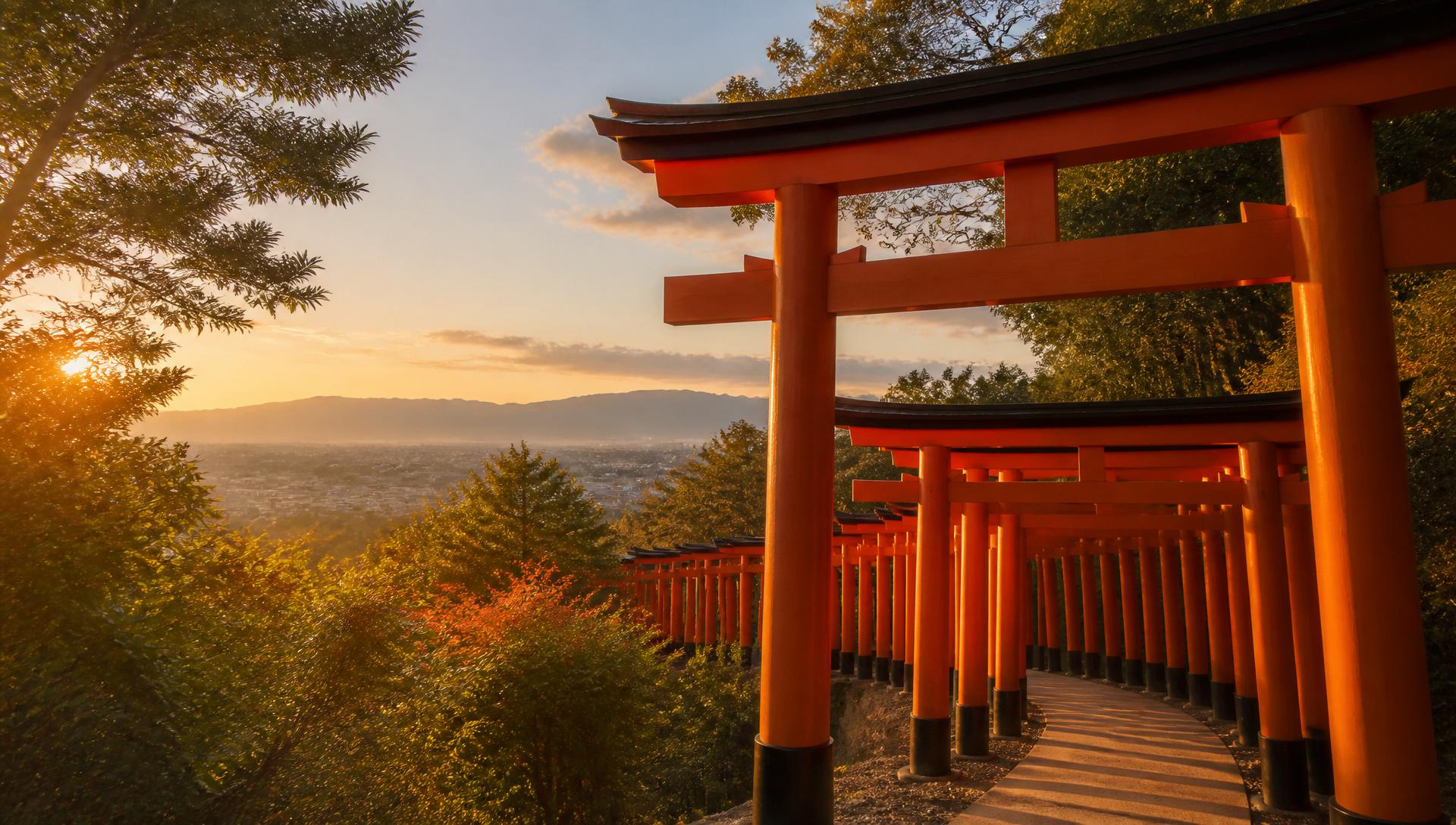
This is Kyoto's most iconic sight, and it's completely free. Thousands of vermilion torii gates wind up the wooded slopes of Mount Inari in a seemingly endless tunnel of orange, one of the most magical walks in Japan. The full loop to the summit takes a couple of hours, and the higher you climb the thinner the crowds become. Go at dawn or dusk to have stretches of it almost to yourself. We'll tell you how early to arrive and how far up to walk for the best of it without the crush.

activity

Wander the Arashiyama bamboo grove and temples

On the city's western edge, the Arashiyama district is home to the famous bamboo grove, where towering green stalks arch overhead and filter the light, free to walk through and utterly otherworldly. Around it lie temples, a scenic river, and a monkey park on the hill. As with Fushimi Inari, the bamboo grove gets very busy, so arrive early for the quiet, atmospheric version. We'll suggest a route that pairs the grove with the best nearby temples and the riverside.

activity

Temple-hop from Kiyomizu-dera to the Golden Pavilion

Kyoto's paid temples are among the finest in Japan and cost just a few pounds each. Don't miss Kiyomizu-dera, the great wooden temple on stilts overlooking the city, approached through charming preserved streets perfect for browsing, and Kinkaku-ji, the dazzling Golden Pavilion shimmering above its reflecting pond. Pick a handful rather than trying to see them all. We'll suggest which paid temples are most worth the entry and how to group them by area to save on transport.

activity

Explore Gion, the geisha district

As evening falls, the historic Gion district comes alive: lantern-lit wooden streets, traditional teahouses, and the chance to glimpse a geiko or maiko (Kyoto's geisha and apprentices) on their way to work. It's free to wander, and atmospheric beyond words. A respectful note: geisha are working professionals, not tourist attractions, so admire from a distance and don't chase them for photos. We'll point you to the prettiest lanes and the best time of evening to stroll them.

food

Graze through Nishiki Market

Known as "Kyoto's Kitchen", the narrow, covered Nishiki Market has been feeding the city for centuries, a long arcade of stalls selling pickles, sweets, seafood, tea, and street snacks. It's free to wander and a brilliant, affordable way to taste your way through Kyoto's food culture, from grilled skewers to matcha treats. It's busiest at lunchtime, so go a little before or after the peak. A food tour is a great way to learn what you're eating, or simply graze as you go. We'll point you to the stalls and snacks worth seeking out.

Frequently asked questions

Kyoto is mid-priced for Japan. Backpackers get by on 6,500-9,000 JPY a day with hostels and konbini meals. A mid-range trip with a nice ryokan or hotel, restaurants and temple entry runs 20,000-35,000 JPY a day. Ryokan with kaiseki dinner is the priciest single splurge and worth doing once.

Four days is ideal. That covers Fushimi Inari, Kinkaku-ji and Ryoan-ji, Arashiyama's bamboo grove and monkey park, Higashiyama and Gion, plus a Nara day-trip. Three days works if you skip Nara. Temple-lovers can easily fill a week.

Late March to early April for cherry blossom and November for autumn colours are the two peak windows and by far the busiest and priciest. May and October are excellent alternatives. Summer is hot and humid. Winter is cool, quiet and beautiful with occasional snow on the temples.

Yes, especially for well-known ryokan, kaiseki restaurants and any small counter sushi or tempura place. Popular ryokan sell out months ahead in cherry blossom and autumn. For everyday meals, konbini, department store basements and casual noodle shops rarely need bookings.

Kyoto is one of the safest cities in the world. Standard travel awareness is enough. Main annoyances are overcrowding at Fushimi Inari, Arashiyama and Gion in cherry blossom and autumn, and increasingly strict rules about photography of geiko on private streets in Gion.

They are opposites and both worth visiting. Tokyo is dense, modern and endless. Kyoto is smaller, traditional and temple-focused. Most Japan trips include both — typically three or four nights each — connected by a two-hour shinkansen ride. First-timers should not choose just one.