

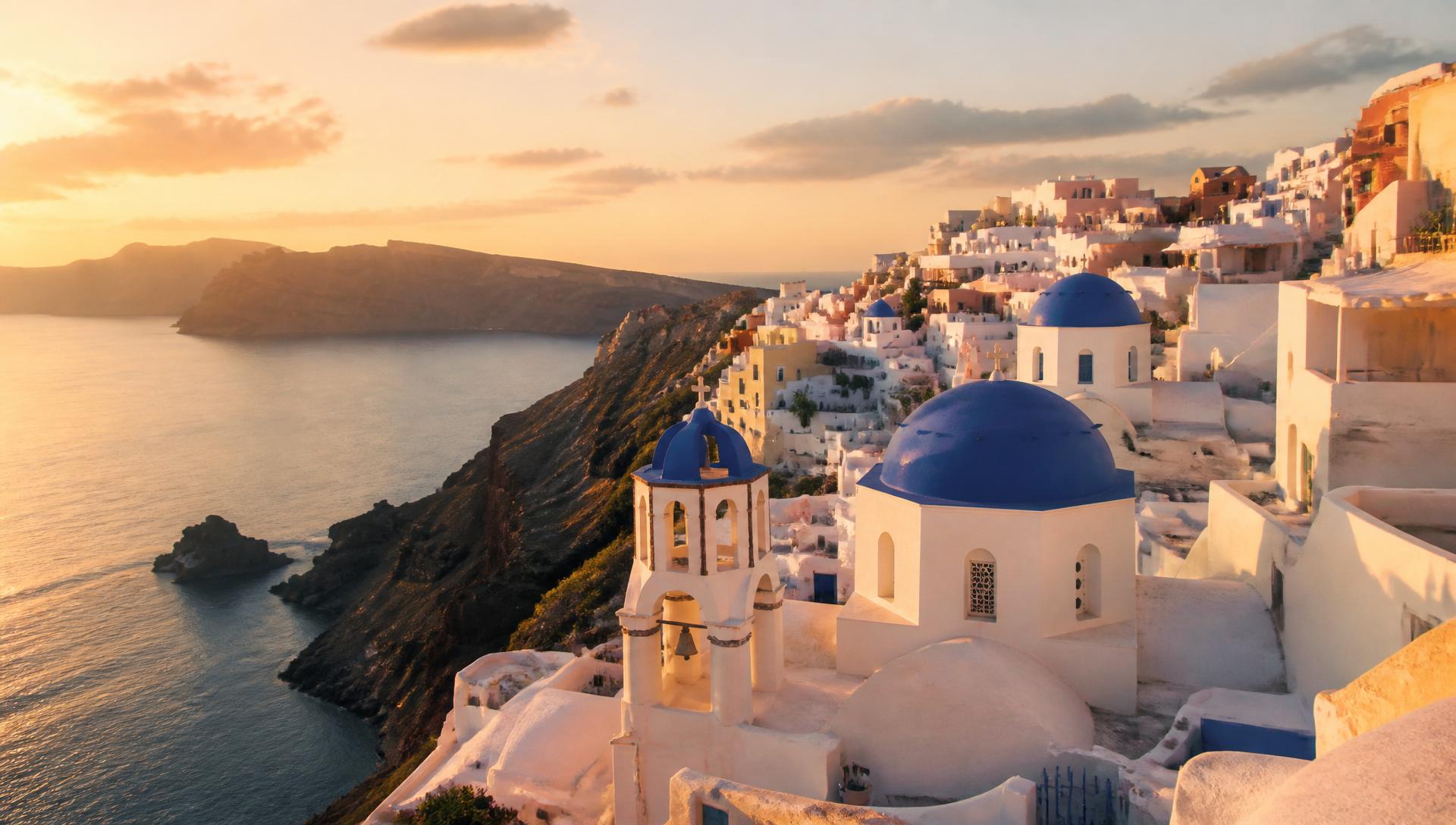
Santorini, Greece

Santorini

GreeceEurope

Some places are so famous you brace yourself for disappointment, and then Santorini delivers anyway. Whitewashed villages spill down black volcanic cliffs, blue-domed churches stand against an impossibly blue sea, and the sunset over the caldera is, no exaggeration, one of the great sights on earth. This is a crescent of land left by an ancient volcanic eruption, and there is nowhere else quite like it. Here's the honest part, the part the glossy honeymoon photos won't tell you: Santorini has a reputation as Greece's most expensive island, and that reputation is mostly deserved. A caldera-view cave suite can cost more for one night than a week elsewhere. But, and this is the good news, you do not need that suite to fall for this island. The sunsets are free, the beaches are free, the hikes are free, and the same Greek food tastes just as good at an inland taverna for a third of the caldera-edge price. With a few smart choices about where you sleep and eat, Santorini is far more achievable than its image suggests. We'll show you exactly how to do it on a real budget.

Best time to visit

Go in the shoulder seasons, late April to May or September to October, and you get the single biggest saving on the island. The weather is just as good as high summer, but accommodation costs 40 to 70% less. The same cave suite that runs €400 a night in August can drop to €160 in May, and the sunset doesn't charge a seasonal premium. Avoid July and August if you possibly can, when prices peak and the famous sunset spots in Oia get uncomfortably crowded. For rock-bottom prices, the winter months of November to February are 40 to 70% cheaper still, though many hotels and restaurants close and the sea is too cold for swimming. Late September is the sweet spot: warm sea, golden light, smaller crowds, and prices well off their peak.

What it costs

Per person, per day, not counting flights.

Backpacker

around €65 to €115 a day. That covers a hostel dorm or simple guesthouse in Kamari or Perissa at €23 to €60, taverna and street-food meals, the cheap KTEL public bus, and free beaches and hikes. A week-long budget trip works out around €455 to €540 per person.

Mid-range

around €235 to €350 a day. This allows a three or four-star hotel in Fira or Firostefani at €180 to €280 a night, a mix of tavernas and nicer dinners, a rented ATV or car for a day or two, and a boat tour.

Luxury

€500 to €900 a day and up, and a caldera-view honeymoon stay can climb far higher.

Things to do in Santorini

Tour listings load once you accept cookies.

A place to visit in Santorini

Hand-picked experiences we'd actually recommend. Tap any one to read more and book.

activity

The Oia sunset, done cleverly

The sunset over the caldera from Oia is the image that sells Santorini, and it lives up to the hype. The catch is that everyone knows it, so the main viewpoint gets shoulder-to-shoulder packed an hour before the sun drops. The smart moves: arrive early to claim a spot, or skip the crush entirely and watch from the free, crowd-free castle ruins in Pyrgos, or from your own taverna table inland. You do not need an expensive caldera-front dinner to see it. We'll point you to the best free and low-cost vantage points and the timing to beat the crowds.

activity

Walk the Fira-to-Oia clifftop trail

This is the best free thing to do on the island, and one of the most beautiful walks in Greece. The trail runs along the caldera rim for around 10km from Fira to Oia, passing through Firostefani and Imerovigli with the blue sea and white villages unfolding beside you the whole way. It takes three to four hours at a gentle pace. Wear proper shoes, as the path is steep and uneven in places, take water, and start early or late to avoid the midday heat. We'll tell you which direction to walk and where to pause along the way.

activity

Beach days on the black volcanic sand

Santorini's beaches are unlike anywhere else: dramatic black and red volcanic sand and pebbles, a legacy of the island's fiery past. Perissa, Perivolos and Kamari on the eastern side have long stretches of black sand with beach bars and easy bus access, while the striking Red Beach near Akrotiri is worth the short scramble to reach. They're free to enjoy, you'll only pay if you want a sunbed. We'll suggest which beaches suit swimming, which suit lounging, and how to reach them cheaply by bus.

tour

A catamaran cruise around the caldera

If you splurge on one paid experience in Santorini, make it this. A catamaran cruise sails you around the caldera to the volcanic hot springs, the Red and White beaches, and out to a sunset on the water away from the Oia crowds, usually with food and drinks included. It's the one tour that consistently earns its price here, and a magical way to see the island from the sea. Book ahead in peak season as the good boats fill up. We'll help you choose between the day cruise and the sunset version.

activity

Akrotiri, the ancient Pompeii of the Aegean

Long before the famous sunsets, Santorini was home to a thriving Bronze Age civilisation, buried and preserved by the same volcanic eruption that shaped the island. The archaeological site of Akrotiri lets you walk through remarkably intact streets and buildings thousands of years old, often called the Pompeii of the Aegean. Entry is inexpensive at around €12, and it's a fascinating, shaded break from the sun and the crowds. We'll tell you how to combine it with the Red Beach nearby for an easy half-day.

Frequently asked questions

Santorini is one of Greece's priciest islands, especially in Oia. Backpackers scrape by on 80-110 EUR a day and a comfortable mid-range trip with a nice hotel (not caldera-view), restaurants and a catamaran day runs 200-320 EUR a day. Caldera-view suites easily hit 500-1,500 EUR a night in peak season.

Three nights is the sweet spot. That gives one caldera sunset, one boat or wine tour, one relaxed beach day and time in both Fira and Oia. Add nights if you want more beach time — Perissa, Kamari or Vlychada are better beach bases than Oia.

May to early June and September to early October are ideal, with warm weather and manageable crowds. July and August are extremely hot and packed. Winter (November to March) is mild but many hotels and restaurants close. Late April can be cool for swimming but flowers everywhere.

Santorini is worth visiting once for the caldera views, sunset and volcanic scenery, but do not expect the empty white-and-blue Instagram fantasy. Oia at sunset is packed. Setting realistic expectations, mixing in less-touristy Pyrgos and the south, and pairing Santorini with a quieter island (Milos, Naxos, Folegandros) usually leads to happier trips.

Oia's castle viewpoint is the classic spot but rammed and often disappointing. Better alternatives: rooftop bars in Firostefani, the caldera path walk between Fira and Oia timed for the golden hour, or the quiet cliffs above Ammoudi Bay. Book dinner at a caldera-facing restaurant to lock in a view.

Santorini is very safe. Main risks are ATV and scooter accidents on narrow cliffside roads (rent only if properly experienced), heatstroke in summer, and expensive medical care if things go wrong. Standard travel insurance handles most issues. Solo travellers, including women, generally feel very safe.