
Venice, Italy

Venice

ItalyEurope

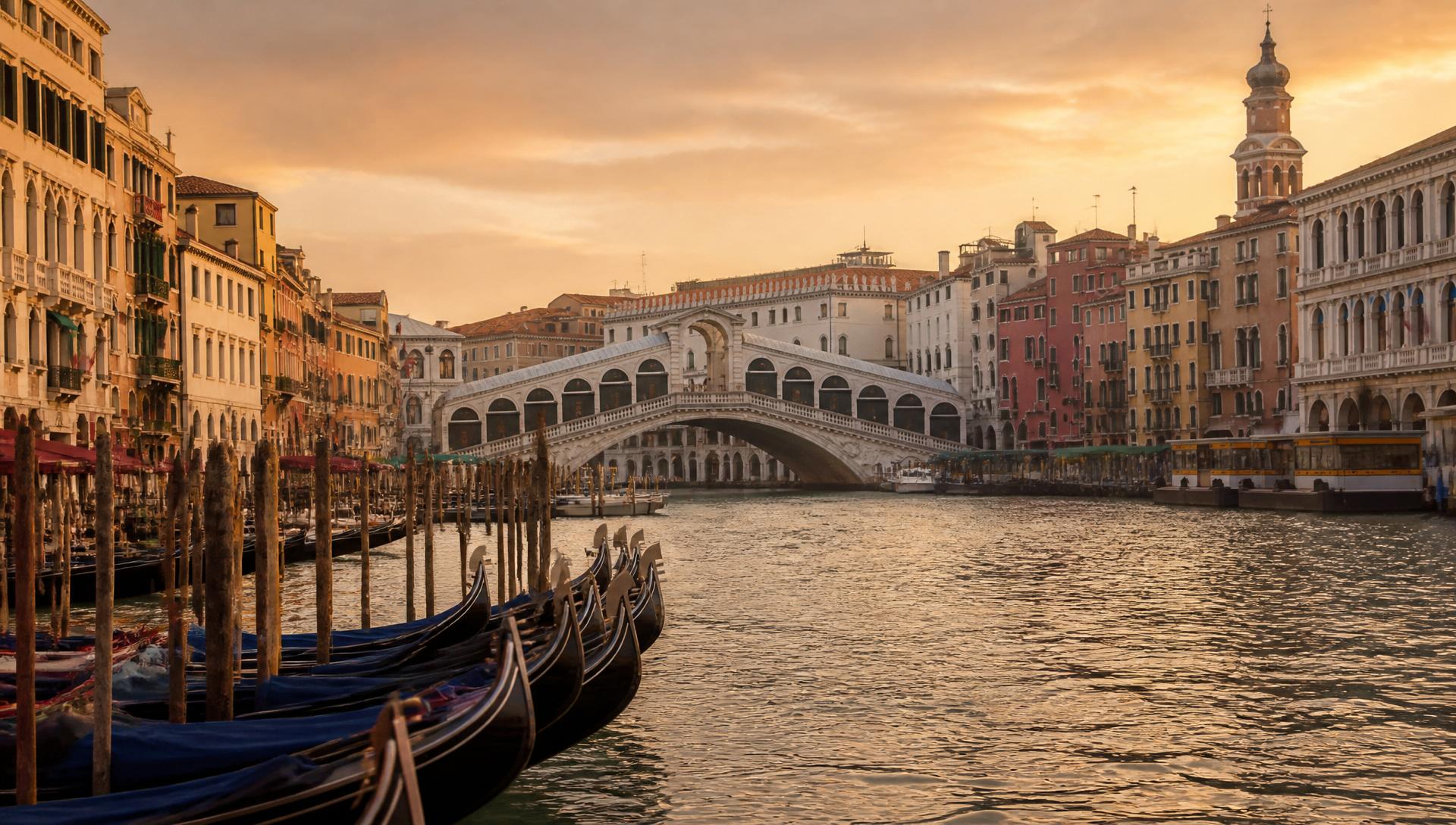
Nowhere else looks like Venice, and photographs never quite prepare you for it. A whole city built on water, with canals where the roads should be, boats where the buses should be, and not a single car anywhere. It should not work, and yet it has for over a thousand years. The first time you step out of the station and the Grand Canal is just there, glinting in front of you, is a moment you don't forget. The trick to loving Venice rather than fighting it is to give up on your map and your plans. The real magic is in getting lost, wandering away from the crowds at St Mark's into the quiet back lanes where laundry hangs between the houses and a tiny bar is serving cicchetti to locals. Venice has a reputation for emptying your wallet, and it can, but a clever traveller eats and drinks like a Venetian for very little and spends the savings on the things that matter. Most of the city's greatest pleasure, simply walking it, costs nothing at all. We'll show you how to do Venice without the tourist-trap prices.

Best time to visit

Go in the shoulder seasons if you possibly can: roughly April to May and late September to October, when the light is beautiful and the worst of the crowds and prices have eased. Avoid high summer, which is the city at its most difficult: peak season from June to August pushes accommodation costs 40 to 60% above the off-season, on top of intense heat and crowds. The best value is in the depths of winter. January is often one of the cheapest months for hotel pricing, with parts of December and February also good value outside the Christmas, New Year and Carnival peaks. One seasonal quirk to know about: in autumn and winter Venice sometimes sees acqua alta, the high water that briefly floods low-lying areas like St Mark's Square, which is more of a curiosity than a crisis if you pack waterproof shoes.

What it costs

Per person, per day, not counting flights.

Backpacker

around €60 to €100 a day. A shoestring budget runs about €60 to €75 a day: a big-dorm bed, supermarket picnic lunches, cicchetti dinners, a 24-hour vaporetto pass, and one minor museum. Dorm beds sit at €30 to €50 in shared rooms, though staying on the mainland in Mestre, 15 minutes away by a €1.50 train, can save €50 to €150 a night.

Mid-range

around €200 to €300 a day. Mid-range visitors need €200 to €300 daily for a comfortable hotel, restaurant dining and full museum access, with mid-range hotels in converted palazzi running €150 to €280 a night.

Luxury

€400 to €600 a day and well beyond on the Grand Canal.

Things to do in Venice

Tour listings load once you accept cookies.

A place to visit in Venice

Hand-picked experiences we'd actually recommend. Tap any one to read more and book.

Get gloriously lost away from St Mark's

Venice's single best experience is also its cheapest: pick a direction, ignore your map, and wander. Within minutes of leaving the crush at St Mark's Square you'll find silent canals, tiny squares, artisan workshops, and bars full of locals rather than tour groups. The Cannaregio district and the quiet corners of Dorsoduro reward this kind of aimless drifting more than anywhere. Bring comfortable shoes and a sense of adventure, and let the city surprise you. We'll suggest a loose route through the parts most people never reach.

St Mark's Square, the Basilica and the Doge's Palace

The heart of Venice is undeniably grand: the great square, the golden domes of St Mark's Basilica, and the Doge's Palace next door with its prison cells and the Bridge of Sighs. The square itself is free to enjoy, and best at sunrise before the crowds arrive. The Basilica and Palace charge entry, and the queues can be brutal in season, so a timed or skip-the-line ticket is worth it to protect your day. We'll tell you what's worth paying for inside and what you can admire for free.

A cicchetti and wine crawl through the bacari

This is how Venetians actually eat and drink, and it's both delicious and kind to your budget. Bacari are little bars serving cicchetti, small plates of local snacks, from a couple of euros each, washed down with a small glass of wine or a spritz. Hop from one to the next, eating and drinking your way across the city for the price of a single tourist-trap dinner. A guided bacaro tour is a great way to find the best ones, or follow our pointers and do it yourself. Stand at the bar to keep the cost down.

Island-hop to Murano, Burano and Torcello

Some of the best of Venice is a short boat ride away in the lagoon. Murano is famous for its glassblowing, Burano for its dazzling rainbow-painted fishermen's houses, and quiet Torcello for its ancient cathedral. You can reach them all on a single vaporetto day pass, making this a brilliant value day out, or take an organised tour if you'd rather have the logistics handled. Burano in particular is one of the most photogenic places in all of Italy. We'll help you plan the hops to make the most of one pass.

The gondola question, answered honestly**

Let's be straight about the gondola. It's iconic, it's romantic, and it's expensive, with a set fare that stings for a short ride. Is it worth it? For some, absolutely, once in a lifetime. For the budget-conscious, there's a clever alternative: the traghetto, a stand-up gondola ferry that crosses the Grand Canal for a couple of euros, giving you the gondola feeling for a fraction of the price. We'll lay out the real costs of both so you can decide what's right for your trip and your wallet, with no judgement either way.

Frequently asked questions

Venice is expensive. Backpackers manage on 75-100 EUR a day and a comfortable mid-range trip with a hotel in the city (not Mestre), restaurants and gondola or vaporetto passes runs 200-300 EUR a day. Hotels in central sestieri, gondolas (80-100 EUR for 30 minutes) and touristy restaurants near San Marco are the biggest costs.

Two full nights, three days is ideal. That gives one day for San Marco and the classic sights, one for exploring Cannaregio, Dorsoduro and Castello, and time for a Burano and Murano day. Sleeping in Venice (not Mestre) transforms the experience once the day-trippers leave.

April to June and September to October are ideal. July and August are hot, humid and packed. November brings acqua alta flooding risk. Carnival (February) is spectacular but very busy and priced accordingly. Winter is cool, atmospheric and much cheaper outside Carnival.

Venice is very safe from violent crime. Main issues are aggressive pickpocketing on packed vaporetti (especially line 1) and around San Marco, plus overpriced tourist-trap restaurants. Note the new day-tripper access fee (5 EUR on specified days) for anyone not staying overnight — check dates before travel.

A gondola ride is expensive but iconic and genuinely lovely if you set expectations. Fixed rates are 80 EUR by day and 100 EUR at night for 30 minutes, up to six people. Splitting with a group makes it reasonable. Choose a quiet back canal in Cannaregio or Dorsoduro rather than the Grand Canal for a real experience.

Stay in Venice itself if the budget allows — the city empties out in the evening once day-trippers leave and it becomes magical. Mestre is much cheaper and 10 minutes by train but you miss the whole atmosphere. Cannaregio and Castello offer better-value accommodation than San Marco.