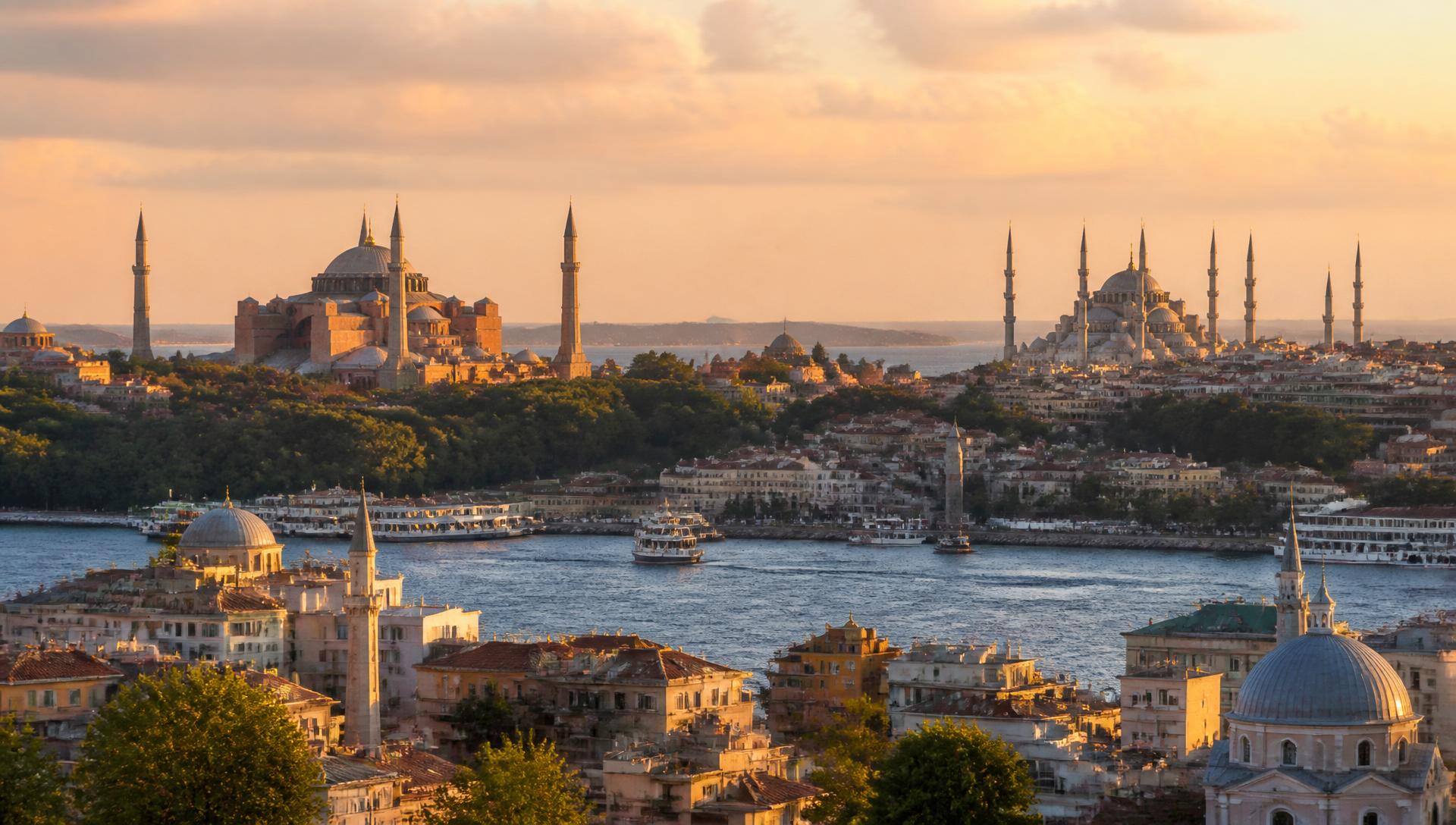
Istanbul, Turkey

Istanbul

TurkeyEurope

Istanbul is the only city in the world that straddles two continents, and it feels like it. Stand on a bridge over the Bosphorus and you've got Europe on one bank and Asia on the other, ferries criss-crossing between them, gulls wheeling overhead, and the call to prayer rising from a skyline of domes and minarets. This was the capital of two great empires, Byzantine and Ottoman, and that layered history is everywhere: in the soaring Hagia Sophia, the tiled palaces, the labyrinthine bazaars that have been trading for 500 years. It's chaotic, sensory, ancient and modern all at once, and utterly intoxicating. For the budget traveller, Istanbul is a gift. Thanks to the favourable exchange rate, your money stretches far further here than in Western Europe, and the city's greatest pleasures, the street food, the ferry rides, the bazaars, the mosques, cost very little or nothing at all. A bowl of something delicious from a local lokanta costs a few euros, a ferry across the Bosphorus is pocket change, and many of the grandest mosques are free to enter. The trick, as ever, is to eat where locals eat and step away from the tourist traps. Get that right and Istanbul delivers a world-class experience for a fraction of the price. We'll show you how.

Best time to visit

The shoulder seasons of April to May and September to early November are the best time to visit: mild weather ideal for walking, fewer crowds, and better-value accommodation than the summer peak. Avoid June to August if budget matters, when prices and humidity both climb. For the cheapest trip, come in winter (November to February, outside New Year), when hotel prices drop 25 to 40% below peak, though you should expect cold and a fair amount of rain. One date to plan around: Ramadan in 2026 runs roughly from late February to the end of March, which is a fascinating time to visit but can affect opening hours and push up demand around the Eid holiday, so check the calendar.

What it costs

Per person, per day, not counting flights.

Backpacker

around €25 to €50 a day. That covers a hostel dorm, street food and local lokanta meals, public transport on an Istanbulkart, and mostly free attractions.

Mid-range

around €55 to €150 a day. This allows a three or four-star hotel or boutique stay, a mix of restaurant and street dining, occasional taxis, and the major paid attractions and a tour or two.

Luxury

€200 a day and up, especially for a Bosphorus-view hotel.

Things to do in Istanbul

Tour listings load once you accept cookies.

A place to visit in Istanbul

Hand-picked experiences we'd actually recommend. Tap any one to read more and book.

activity

Hagia Sophia and the Blue Mosque

Facing each other across a leafy square in the old city stand two of the most magnificent buildings on earth. The Hagia Sophia, nearly 1,500 years old, was the greatest church in Christendom, then a mosque, then a museum, and now a mosque again, its vast dome still breathtaking. Across the way, the Blue Mosque dazzles with its cascade of domes and tens of thousands of blue tiles, and is free to enter. Dress respectfully and visit outside prayer times. We'll explain the current ticket situation for the Hagia Sophia and the best time to see both without the worst crowds.

activity

Get lost in the Grand Bazaar and Spice Bazaar

The Grand Bazaar is one of the oldest and largest covered markets in the world, a dizzying maze of 4,000 shops selling carpets, lamps, jewellery and trinkets, while the nearby Spice Bazaar is a riot of colour and aroma. Wandering them is free and one of Istanbul's great experiences, whether or not you buy. If you do, haggling is expected, so start at around a third of the asking price and work up, and never accept the first offer. We'll share tips on navigating the bazaars and how to bargain without stress.

activity

Cross the Bosphorus by public ferry

Here's the best-value experience in the city. Instead of paying for a sightseeing cruise, simply hop on a scheduled public ferry across the Bosphorus, the strait dividing Europe and Asia, for the price of a normal transport fare on your Istanbulkart. You'll glide past palaces, fortresses, and the great bridges, tea in hand, with the same views the tour boats charge a fortune for. Take it over to the Asian side at Kadıköy for lunch. We'll tell you which routes give the best views and the perfect time of day to go.

food

Eat your way through Kadıköy and the street stalls

Istanbul is one of the world's great food cities, and eating well here costs very little. Start with breakfast simit and tea, graze on döner, gözleme, and stuffed mussels from street vendors, and sit down to a meze spread at a local meyhane. The food market in Kadıköy on the Asian side is a feast for the senses and far cheaper than the tourist spots. A guided food tour is a brilliant way to discover it, or follow our pointers and assemble your own crawl. Look for the esnaf lokantası, the tradesmen's restaurants, for the best home cooking.

tour

A day trip to the Princes' Islands

When the city gets overwhelming, the Princes' Islands are the perfect escape, a short, cheap ferry ride out into the Sea of Marmara to a cluster of car-free islands where the pace slows right down. Rent a bike and cycle the traffic-free pine-lined roads, swim, and eat fresh seafood by the water. The ferry there costs little more than a normal fare, making it one of the best-value day trips going. We'll tell you which island to head for and how to plan the day around the ferry times.

Frequently asked questions

Istanbul is one of Europe's best-value big cities thanks to the weak lira. Backpackers manage on 35-55 EUR a day and a comfortable mid-range trip with a hotel in Sultanahmet or Beyoglu, restaurants and Bosphorus cruise runs 90-160 EUR a day. Turkish inflation means prices in lira change fast — check recently.

Four days is a good length. That covers Sultanahmet (Hagia Sophia, Blue Mosque, Topkapi, Basilica Cistern), the Grand and Spice Bazaars, a Bosphorus cruise, an evening in Beyoglu and Karakoy, and a day on the Asian side in Kadikoy. Add a day for Princes Islands in summer.

April to June and September to October are ideal, with mild weather and clear light on the Bosphorus. July and August are hot and busy. Winter is cool and rainy but much cheaper, and the mosques and museums are quiet.

Istanbul is generally safe. Main issues are shoe-shine scams around Sultanahmet, inflated taxi meters (use BiTaksi or Uber), and pickpocketing on the tram and around the Grand Bazaar. Solo women may get more attention than at home but serious harassment is rare in tourist areas. Dress modestly for mosques.

Yes. Women need to cover hair, shoulders and knees inside mosques including Hagia Sophia and the Blue Mosque. Men need to cover shoulders and avoid shorts above the knee. Most mosques provide scarves and skirts free at the entrance but bringing your own is easier.

Both. Istanbul straddles the Bosphorus with the historic Sultanahmet and Beyoglu on the European side and residential Kadikoy and Uskudar on the Asian side. Ferry hopping between them is one of the best things to do in the city and takes about 15-20 minutes.